AI Applications for Specialty Medical Practices
Different medical specialties have different AI opportunities. Here's how nephrology, eye care, and other specialties can leverage AI effectively.
AI Applications for Specialty Medical Practices
AI opportunities in healthcare aren’t one-size-fits-all.
A nephrology practice managing chronic kidney disease patients has fundamentally different needs than an ophthalmology practice marketing LASIK procedures. The administrative burdens differ. The patient populations differ. The workflows differ.
The most effective AI implementations address specialty-specific challenges rather than applying generic solutions. Here’s how different specialties can leverage AI for maximum impact.
Nephrology: Managing Chronic Complexity
Nephrology practices face unique challenges that create specific AI opportunities.
The Nephrology Challenge
Nephrology is defined by chronic disease management:
- Patients with CKD require ongoing monitoring over years
- Care coordination across multiple providers (PCPs, dialysis centers, vascular surgeons)
- Complex referral networks with primary care
- Extensive prior authorization requirements
- High-touch patient education needs
AI Applications for Nephrology
Referral Coordination
Nephrologists depend heavily on PCP referrals. AI can help:
- Automated referral acknowledgment and tracking
- Intelligent routing of incoming referrals to appropriate providers
- Communication automation back to referring physicians
- Referral relationship analytics (which PCPs refer, patterns, gaps)
Prior Authorization Automation
Nephrology involves high prior auth volume:
- Dialysis access procedures
- Specialty medications (ESAs, phosphate binders)
- Imaging and testing
- Transplant workups
AI can automate data gathering, form completion, and submission for routine authorizations.
Learn more about prior authorization automation →
Patient Education and Engagement
CKD patients need extensive education:
- Disease progression understanding
- Dietary management
- Medication adherence
- Dialysis preparation and options
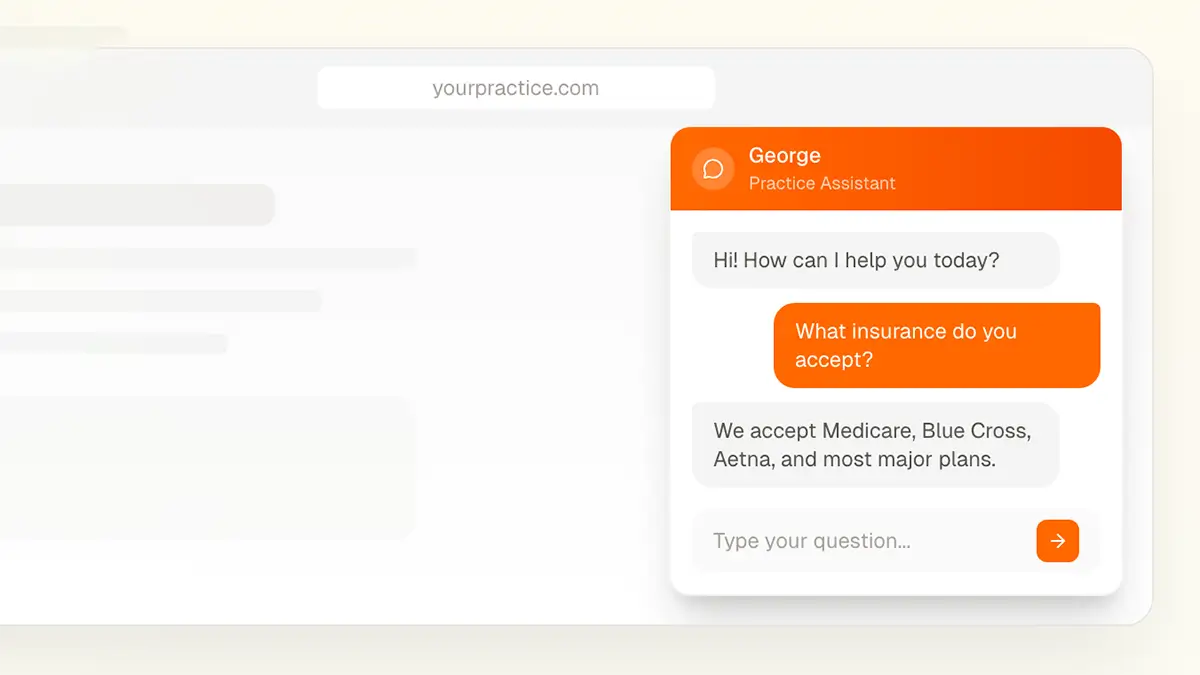
AI chatbots can handle routine education questions, provide personalized information based on CKD stage, and supplement clinical education.
Lab Result Management
Nephrology generates extensive lab data:
- eGFR tracking
- Electrolyte monitoring
- Anemia management labs
AI can flag concerning trends, identify patients needing intervention, and automate routine result communication.
Dialysis Coordination
For practices coordinating with dialysis centers:
- Automated communication workflows
- Schedule coordination
- Outcome tracking
- Quality metric monitoring
Learn more about nephrology marketing and technology →
Nephrology-Specific Considerations
- Chronic relationships: Patients stay with nephrology practices for years; AI should support long-term relationship management
- Care coordination complexity: Multiple providers involved; AI must facilitate, not fragment, communication
- Patient education intensity: CKD management requires significant education; AI can extend but not replace provider education
- Regulatory environment: ESRD programs have specific requirements; AI must support compliance
Eye Care: Elective Procedures and Retail Operations
Eye care practices—ophthalmology and optometry—have distinct AI opportunities.
The Eye Care Challenge
Eye care combines:
- Routine vision care and medical eye care
- Elective surgical procedures (LASIK, premium IOLs)
- Retail optical operations
- Different patient decision journeys for different services
AI Applications for Eye Care
LASIK and Elective Procedure Support
Elective procedures involve extensive patient consideration:
- AI chatbots for initial candidate screening and FAQ
- Automated nurture sequences for leads not ready to book
- Consultation preparation automation
- Post-procedure communication and check-in
AI can handle the high volume of “Am I a candidate?” and “How much does it cost?” inquiries that consume staff time.
Optical Retail Support
Optical operations benefit from:
- Inventory intelligence: AI analyzing sales patterns, suggesting stock adjustments
- Patient communication: Automated reminders when prescriptions expire or annual exams are due
- Insurance benefit reminders: Automated outreach when benefits reset
Prior Authorization for Surgical Procedures
Cataract surgery, especially with premium IOLs, requires authorization:
- Medical necessity documentation
- Insurance vs. patient responsibility calculations
- Pre-operative testing coordination
AI can streamline the authorization process for surgical cases.
Patient Communication
Eye care involves many routine communications:
- Annual exam reminders
- Contact lens reorder prompts
- Post-procedure check-in
- Glasses ready notifications
AI can automate routine outreach while flagging patients needing personal attention.
Reputation Management Support
Eye care is reputation-dependent, especially for elective procedures:
- Automated review requests post-visit
- Sentiment monitoring
- Response drafting for reviews
Learn more about eye care marketing →
Eye Care-Specific Considerations
- Elective procedure dynamics: LASIK patients are choosing, not needing, your services; AI should support sales-like engagement
- Optical retail complexity: Retail operations have different needs than clinical services
- Visual nature of specialty: Eye care lends itself to visual content; AI content tools can support marketing
- Competitive market: Elective eye care is highly competitive; AI should support differentiation
Other Specialty Applications
While nephrology and eye care are our areas of deep expertise, AI opportunities exist across specialties:
Orthopedics
- Surgical authorization automation
- Physical therapy coordination
- Post-surgical outcome tracking
- Workers’ comp documentation assistance
Dermatology
- Cosmetic procedure lead nurturing
- Appointment reminder optimization
- Before/after documentation workflows
- Product recommendation engines
Cardiology
- Chronic disease management (similar to nephrology)
- Remote monitoring data processing
- Risk stratification assistance
- Cardiac rehab coordination
Pain Management
- Prior authorization (extremely high volume in this specialty)
- Prescription monitoring program integration
- Patient agreement tracking
- Visit documentation assistance
Gastroenterology
- Colonoscopy scheduling optimization
- Prep instruction automation
- Pathology result communication
- Surveillance reminder systems
General Surgery
- Pre-operative assessment workflows
- Insurance authorization
- Post-operative care instructions
- Follow-up scheduling automation
Common Themes Across Specialties
While specific applications vary, some AI opportunities are universal:
Administrative Automation
Every specialty deals with:
- Prior authorizations
- Insurance verification
- Appointment scheduling and reminders
- Document management
AI can reduce administrative burden regardless of clinical specialty.
Patient Communication
All practices benefit from:
- Automated appointment reminders
- Pre-visit instructions
- Post-visit follow-up
- Routine FAQ handling
AI chatbots and communication automation work across specialties.
Referral Management
Specialists depend on referrals:
- Tracking incoming referrals
- Communication with referring providers
- Referral relationship analytics
AI can improve referral workflows for any referral-dependent specialty.
Documentation Assistance
Clinical documentation burden is universal:
- Note generation assistance
- Template optimization
- Quality measure tracking
AI documentation tools (used appropriately) can help across specialties.
Implementing Specialty-Specific AI
Start With Your Biggest Pain Point
Don’t try to solve everything. Identify:
- Where does your staff spend the most time on low-value tasks?
- What specialty-specific workflows are most burdensome?
- Where do errors or delays most commonly occur?
Look for Specialty-Specific Solutions
Generic AI tools may work, but specialty-specific solutions often:
- Understand your terminology
- Know your workflows
- Integrate with specialty-specific systems
- Have references from similar practices
Consider Your Patient Population
AI implementation should account for:
- Patient demographics (age, tech comfort)
- Condition characteristics (chronic vs. acute)
- Decision journey (elective vs. necessary)
- Communication preferences
Plan for Integration
Specialty practices often use:
- General EHRs with specialty modules
- Specialty-specific practice management systems
- Ancillary systems (imaging, labs, etc.)
AI solutions must work within your specific technology environment.
Getting Started
For Nephrology Practices
- Assess prior authorization burden—this is usually the biggest opportunity
- Evaluate referral management pain points
- Consider patient education automation for CKD
- Look at care coordination with dialysis centers
Contact us about nephrology AI solutions →
For Eye Care Practices
- Evaluate patient inquiry handling—especially for LASIK
- Assess optical operations efficiency
- Consider surgical authorization automation
- Look at reputation management automation
Contact us about eye care AI solutions →
For Other Specialties
- Document your biggest administrative pain points
- Research specialty-specific AI solutions
- Evaluate general solutions that might address your needs
- Consider pilot programs to test fit
The Bottom Line
The most effective AI implementations are specialty-aware. They address the specific challenges, workflows, and patient populations of your particular specialty rather than applying generic solutions.
Whether you’re managing chronic kidney disease patients, marketing LASIK procedures, or running any other specialty practice, AI opportunities exist—but the right applications depend on understanding your specialty’s unique characteristics.
Ready to Explore AI for Your Specialty?
We specialize in AI solutions for nephrology and eye care practices, and work with other specialties to identify and implement effective AI tools.
Contact us to discuss your specialty’s needs →
Or call us directly: (678) 824-2420