AI for Medical Practices: A Practical Guide to Getting Started
Learn how medical practices are using AI to reduce administrative burden, automate workflows, and improve efficiency—without the hype.

AI for Medical Practices: A Practical Guide to Getting Started
Artificial intelligence is everywhere in healthcare headlines. If you believe the marketing, AI is about to diagnose patients, replace physicians, and revolutionize medicine overnight.
The reality is more practical—and more immediately useful.
For most medical practices, AI isn’t about replacing doctors or making diagnoses. It’s about reducing the administrative burden that consumes 15-20 hours of your staff’s time every week. Prior authorizations. Phone calls. Intake paperwork. Referral coordination. These are the tasks where AI can make a real difference today.
At MedTech Consulting, we’ve helped medical practices implement AI solutions that actually work—tools that reduce staff workload, improve patient experience, and maintain strict HIPAA compliance. Here’s what you need to know to get started.
What AI Actually Does for Medical Practices
Let’s cut through the hype. Here’s what AI can realistically do for your practice right now:
Administrative Automation
The biggest immediate opportunity is automating repetitive administrative tasks:
- Prior authorization requests: AI can gather required information, complete forms, and submit requests automatically
- Patient intake: Digital forms that patients complete before arrival, with AI validating and organizing the data
- Document processing: Automatically extracting information from faxed referrals, lab results, and insurance documents
- Appointment-related communications: Confirmations, reminders, and pre-visit instructions
Patient Communication
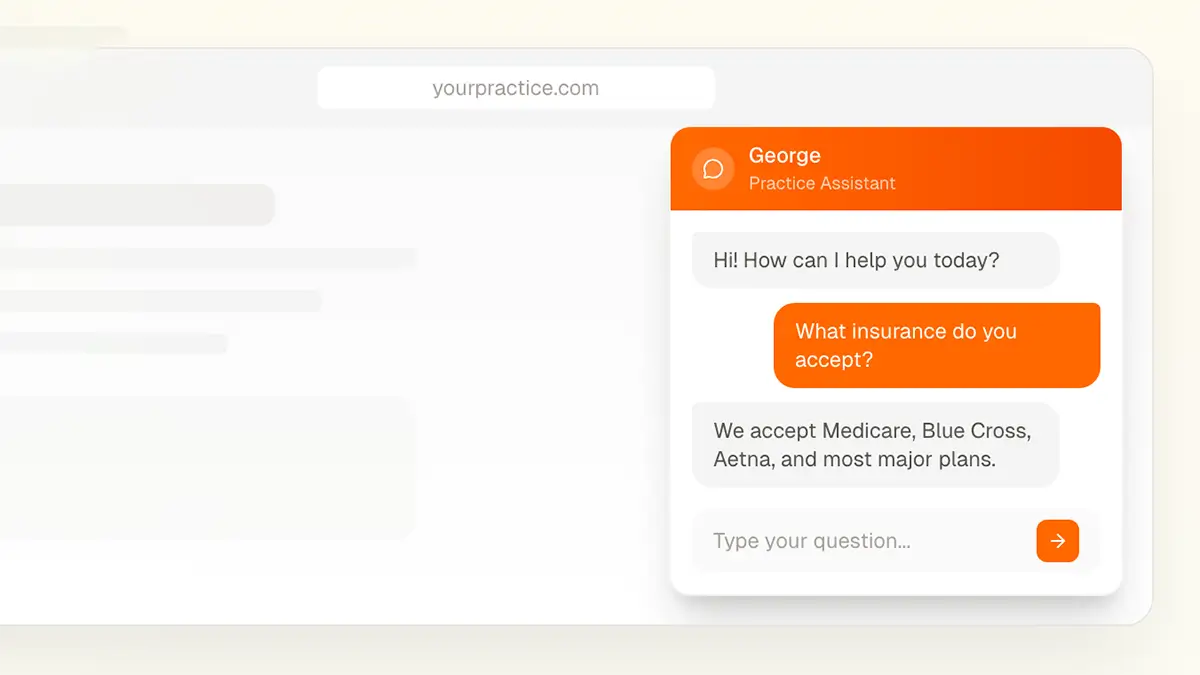
AI chatbots and virtual assistants can handle routine patient questions:
- Office hours, location, and parking information
- Insurance acceptance questions
- General FAQ responses
- Pre-visit instructions and preparation requirements
- Post-procedure care information
These aren’t replacing your clinical staff—they’re handling the questions your front desk answers dozens of times daily.
Workflow Optimization
AI can identify inefficiencies and suggest improvements:
- Flagging incomplete documentation before it causes claim denials
- Routing incoming communications to the right department
- Prioritizing tasks based on urgency and deadlines
What AI Can’t Do (Yet)
Let’s be equally clear about limitations:
- AI doesn’t make clinical decisions. It can organize information, but diagnosis and treatment remain physician responsibilities
- AI doesn’t integrate directly into most EHR systems. It typically works alongside your existing systems, not inside them
- AI requires human oversight. Every automated process needs human review, especially anything involving patient care
- AI isn’t perfect. It makes mistakes and requires monitoring, especially early on
Understanding these limitations is crucial for setting realistic expectations.
Where to Start: High-Impact, Low-Risk Applications
If you’re new to AI, start with applications that offer significant benefits with manageable risk.
1. Patient FAQ Chatbots
A chatbot on your website that answers common questions is one of the lowest-risk AI applications. It doesn’t involve protected health information (when designed properly), doesn’t affect clinical care, and can significantly reduce phone volume.
Learn more about AI chatbots for medical practices →
2. Prior Authorization Automation
Prior auth is universally hated and universally time-consuming. AI tools can automate much of the data gathering and form completion, though human review before submission is still recommended.
Learn more about workflow automation →
3. Document Processing
If your practice still receives faxed referrals and lab results, AI can automatically extract key information and route documents to the right place—far faster than manual processing.
4. Patient Intake Digitization
Digital intake forms that patients complete on their phones before arrival, with AI organizing and validating the information. Reduces clipboard paperwork and data entry.
The HIPAA Question
Every medical practice considering AI asks the same question: “Is this HIPAA compliant?”
The answer depends entirely on implementation. AI itself isn’t HIPAA compliant or non-compliant—it’s how you deploy it, what data it accesses, and what safeguards you put in place.
Key considerations:
- Business Associate Agreements (BAAs): Any AI vendor handling PHI must sign a BAA
- Data minimization: AI should only access the data it needs for its specific function
- Audit trails: All AI interactions with patient data should be logged
- Human oversight: Automated decisions affecting patient care need human review
Learn more about AI compliance and HIPAA →
Questions to Ask Before Implementing AI
Before you sign with any AI vendor, ask these questions:
About Compliance
- Will you sign a Business Associate Agreement?
- Where is patient data stored and processed?
- What security certifications do you have?
- How do you handle data breaches?
About Integration
- How does your solution work with our existing EHR/PM systems?
- What’s the implementation timeline?
- What training is required for our staff?
- What ongoing support do you provide?
About Performance
- What accuracy rates should we expect?
- How do you handle errors?
- What metrics will we use to measure success?
- Can we see references from similar practices?
About Costs
- What’s the total cost including implementation?
- Are there per-transaction or per-user fees?
- What happens if we want to leave?
- Is there a pilot program to test before committing?
The Build vs. Buy Decision
Should you use off-the-shelf AI solutions or build something custom?
Off-the-shelf solutions work well when:
- Your needs match common use cases (chatbots, basic automation)
- You want faster implementation
- You have limited technical resources
- Budget is constrained
Custom development makes sense when:
- Your specialty has unique requirements
- Off-the-shelf solutions don’t fit your workflows
- You want a competitive differentiator
- You have complex integration requirements
Most practices start with off-the-shelf solutions and consider custom development only after identifying gaps that standard tools don’t address.
Learn more about custom AI development →
Getting Started: A Practical Roadmap
Here’s how to approach AI implementation sensibly:
Month 1: Assessment
- Identify your biggest administrative pain points
- Estimate time spent on repetitive tasks
- Review your current technology infrastructure
- Research potential solutions
Month 2: Pilot Selection
- Choose one high-impact, low-risk application
- Evaluate 2-3 vendors
- Check references and compliance credentials
- Negotiate a pilot program
Months 3-4: Pilot Implementation
- Deploy with a limited scope (one location, one department)
- Train staff thoroughly
- Monitor closely and gather feedback
- Measure against baseline metrics
Month 5+: Evaluation and Expansion
- Assess pilot results honestly
- Decide whether to expand, adjust, or abandon
- Plan next phase based on learnings
Common Mistakes to Avoid
We’ve seen practices struggle with AI when they:
- Try to do too much too fast. Start small, prove value, then expand
- Underestimate training needs. Staff adoption makes or breaks AI projects
- Ignore workflow changes. AI changes how people work—plan for it
- Skip the compliance review. HIPAA violations are expensive and reputation-damaging
- Expect perfection. AI improves over time; early hiccups are normal
- Forget about maintenance. AI systems need ongoing monitoring and updates
The Bottom Line
AI for medical practices isn’t about replacing people or making diagnoses. It’s about reclaiming the hours your staff spends on administrative tasks so they can focus on patient care.
Start with a clear problem to solve. Choose solutions appropriate to your size and capabilities. Implement carefully with proper compliance safeguards. And measure results honestly.
The practices getting the most value from AI today aren’t the ones chasing the latest headlines—they’re the ones solving real operational problems with practical tools.
Ready to Explore AI for Your Practice?
We help medical practices evaluate, implement, and optimize AI solutions—with a focus on practical results and rigorous HIPAA compliance.
Contact us to discuss your needs →
Or call us directly: (678) 824-2420